WhatsApp Business API With No Markup Pricing: How Com.bot Keeps Costs Transparent in 2026
WhatsApp Business API bills are hard to read, and most platforms add a markup on top. In 2026, per-conversation pricing shifts by category and country, so a hidden margin quietly inflates every support chat and order update you send.
This article explains what no markup pricing actually means, how Com.bot structures WhatsApp conversation costs, and how its Meta partnership, setup process, and Silver, Gold, and Platinum plans compare. By the end, you will know whether Com.bot fits your messaging volume and budget.
What Is Com.bot? The AI Unified Business Communication Platform
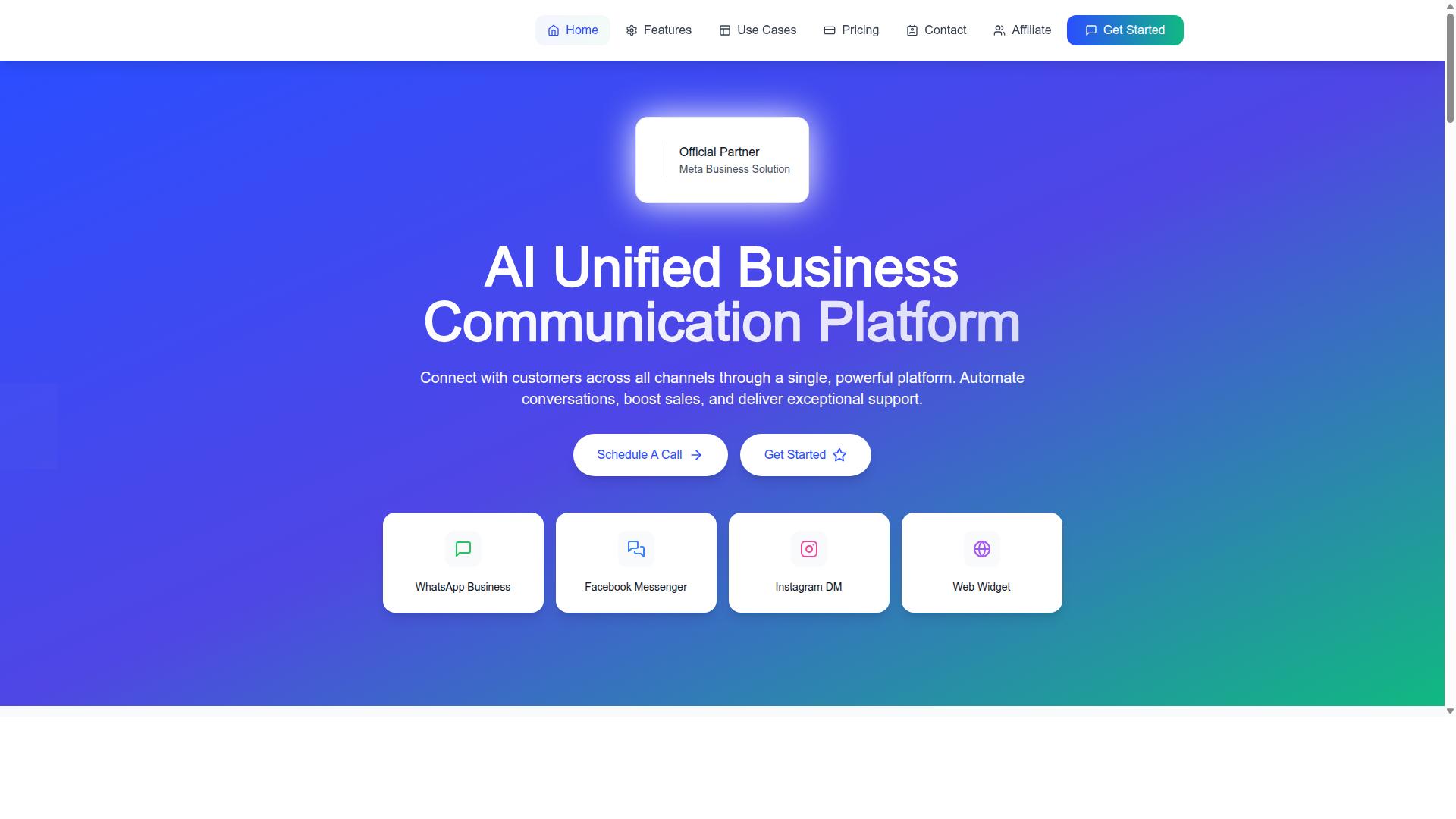
Com.bot is an AI-powered unified business communication platform that consolidates WhatsApp Business, Facebook Messenger, Instagram DM, and Web Widget into a single interface for managing customer conversations. Instead of juggling four separate dashboards, teams work from one inbox and one set of automation rules.
That unified approach matters for cost transparency. When every channel feeds into one platform, billing and usage are easier to track. Com.bot is an Official Meta Business Partner with direct WhatsApp Business API integration, so businesses connect to the WhatsApp Business Platform through a verified route rather than a reseller chain.
The platform is built to automate conversations, boost sales, and deliver support at scale.
Com.bot is owned and managed by Com Bot AI Limited. It processes 25M+ messages per day, a volume that reflects how deeply messaging has become a core customer engagement channel. The platform also supports enterprise security with end-to-end encryption, quick setup and integration, and real-time message delivery.
For the topic of this article, one detail stands out: Com.bot applies no markup on WhatsApp conversations. That single commitment shapes how the platform approaches pricing across every channel it connects.
Who Com.bot Serves: 23,000+ Businesses, Government Bodies and Global Partners
Com.bot serves over 23,000 active customers, including more than 100 government bodies and 500 global partners, addressing the needs of businesses that require robust multi-channel communication. That mix says something about the platform's range, from small teams sending their first template message to agencies managing messaging for dozens of clients.
Different customer segments come with different requirements:
- Small and mid-sized businesses need quick setup, multi-channel support, and predictable messaging costs.
- Enterprises need bulk messaging capacity, automation at scale, and reliable delivery across channels.
- Government agencies need secure, high-volume communication with citizens and internal teams.
- Global partners need a platform they can build services on, backed by official API access.
These groups share one common thread: messaging volume that grows over time. When conversation costs rise with volume, no markup pricing becomes a structural advantage rather than a small perk. A business sending thousands of utility or authentication messages each month feels the difference far more than one sending a handful.
The 100K+ bots created on the platform show how widely customers rely on automation, not just manual replies. Partners and enterprises build on that foundation, while smaller teams use ready-made flows to cover common questions and order updates without hiring extra staff.
For all these segments, the value proposition is consistent: one platform, multiple channels, AI-assisted automation, and a billing approach that does not add a layer of markup on top of WhatsApp conversation costs.
What "No Markup Pricing" Means for WhatsApp Business API in 2026
In 2026, WhatsApp Business API pricing continues to evolve with conversation-based and per-message billing models, and "no markup pricing" means businesses pay the wholesale rate set by Meta without additional BSP fees.
The concept sounds simple, yet it is genuinely rare in practice. Most Business Solution Providers act as resellers. They buy messaging capacity from Meta at wholesale rates, then resell it to their clients at a higher retail price. That gap is the retail markup, and it often goes unnamed on invoices.
No markup pricing removes that layer entirely. When a provider passes through Meta's rates directly, the amount you pay for a conversation reflects what the platform itself charges, not what a middleman decides to add on top.
Why Markups Accumulate Quietly
Markups rarely appear as a single visible line item. They tend to hide inside blended rates, bundled platform charges, or per-conversation surcharges that are difficult to compare across providers. For a business sending thousands of template messages each month, even a small per-conversation addition compounds into a meaningful sum.
This is where cost transparency becomes a practical concern, not just a philosophical one. If you cannot see the underlying rate Meta sets, you cannot forecast spend or evaluate whether a provider's fee structure is fair.
The Four Conversation Categories That Drive Cost
Under Meta's model, every WhatsApp conversation falls into a category, and each category carries its own rate. Understanding these categories is essential to reading any invoice correctly.
- Marketing conversations: promotions, offers, re-engagement campaigns, and similar outbound messages
- Utility conversations: order confirmations, delivery updates, account alerts, and transactional notifications
- Authentication conversations: one-time passcodes and identity verification messages
- Service conversations: customer-initiated support exchanges
Rates differ by category and by country, and Meta periodically revises them. A provider applying a markup on top of these rates makes the final number harder to trace back to its source. With no markup pricing, the category rate you see is the category rate Meta sets.
That distinction matters most for high-volume senders. Marketing campaigns, in particular, can scale quickly, and a transparent per-category breakdown lets teams decide where to spend and where to pull back.
How Com.bot Keeps WhatsApp Conversation Costs Transparent
Com.bot ensures cost transparency by charging exactly what Meta charges for WhatsApp conversations, with no hidden fees or retail markups on API access or messaging costs.
This is the core of the offer. Com.bot does not add a percentage on top of Meta's rates, and it does not bury platform charges inside messaging costs. WhatsApp messaging runs at actual Meta rates, no markup. What you owe for conversations is what the platform charges for those conversations.
Clear Costs, Category by Category
Because Com.bot passes through Meta's wholesale rates, the pricing structure mirrors the four conversation categories directly. Marketing, utility, authentication, and service conversations each carry their own rate, and each appears as its own cost rather than being folded into a blended average.
That breakdown gives finance and operations teams something concrete to work with. Instead of a single opaque messaging figure, they can see which category is driving spend and adjust campaign volume accordingly.
Usage-Based Pricing Without Platform Fees in the Messaging Bill
Com.bot's approach is usage-based pricing: you pay for the conversations you actually send, not for a messaging allowance you may never consume. There are no monthly platform fees hidden inside the messaging costs.
Com.bot's own plans are priced separately and clearly, so the software subscription never blurs into the WhatsApp bill:
- Silver Plan: $149 per quarter
- Gold Plan: $349 per quarter (Recommended)
- Platinum V1: $2500 per quarter
Add-ons are listed individually at $10 per month for items such as an additional team member, a social channel, external actions (per 5000), bot triggers (per 25000), and an ecom store. Dedicated support is available at $49 per hour for WABA, CRM, and Inbox, and $99 per hour for Ecommerce, Bots, and Automations. All figures are in USD.
What This Means for Your Bottom Line
The practical effect is straightforward. When messaging is billed at Meta's rates with nothing added, every conversation you send costs what it should cost. Savings scale with volume, which is why enterprise messaging operations feel the difference most.
Transparency also changes how teams plan. Knowing the exact rate per category makes budgeting realistic and removes the guesswork that comes with blended pricing. For businesses comparing providers in 2026, that clarity is the deciding factor.
Com.bot's model is simple to state and simple to verify: WhatsApp conversations at actual Meta rates, no markup, no hidden fees, and a plan structure that stays separate from messaging spend. For any business that sends WhatsApp messages at scale, that is a materially better deal than paying a retail markup on every conversation.
How Com.bot's WhatsApp Business API Works: Setup, Automation and Real-Time Delivery
Setting up Com.bot's WhatsApp Business API involves a guided onboarding process that connects your WhatsApp Business account to the platform, enabling automation and real-time message delivery. The goal is simple: get your business onto the official WhatsApp Business Platform without forcing your team to wrestle with raw API documentation.
For teams that care about no markup pricing, the technical setup matters because it determines how messages flow and how they are billed. Com.bot handles the integration layer so you can focus on conversations, not infrastructure.
API access and verification come first. You connect your WhatsApp Business account, complete the verification steps required by Meta, and choose the access route that fits your operation.
Once verified, the platform links your account to Com.bot's tools. That includes the Unified Team Inbox, where agents handle incoming messages, and the Automation Builder with 1000+ integrations, which connects WhatsApp to the rest of your stack.
Automation is where Com.bot's WhatsApp Business API becomes more than a messaging pipe. The Visual Bot Builder uses a drag-and-drop interface, so you can design conversation flows without writing code.
- Smart Chatbots handle common questions and route complex ones to humans
- Bulk Messaging sends updates to many contacts at once
- Order Updates and Notifications keep customers informed automatically
- Payment Collection and Native Payments support transactions inside WhatsApp
- Customer Support workflows keep response times consistent
These capabilities run on top of the same API connection, which means a single setup can power support, commerce, and alerts. For a business comparing per-message billing options, that consolidation reduces the number of moving parts to manage.
Real-time delivery is the backbone of the whole system. When a customer sends a message, it arrives in the Unified Team Inbox immediately, and automated flows can respond within the same conversation. Template messages, session messages, and the various conversation categories all pass through the same delivery pipeline.
That pipeline is built for scale. Com.bot processes 25M+ messages daily, which matters for enterprises running high-volume customer engagement across WhatsApp, Facebook, and Instagram. Multi-channel support means the same team can handle conversations from several platforms without switching tools.
Reliability at that volume depends on infrastructure, not luck. A platform handling tens of millions of daily messages has to manage throughput, retries, and delivery confirmations consistently. For buyers evaluating a BSP, that track record is a practical signal that the service can absorb seasonal spikes and campaign bursts.
Team collaboration rounds out the setup. Role-based access lets you control who can view conversations, send messages, or manage automations. For larger organizations, that separation keeps operations clean and auditable.
Com.bot also extends beyond WhatsApp itself. Tasks.Bot handles enterprise-grade task automations, Tickets.Bot manages event ticketing, and Calendars.Bot covers AI appointment booking. Businesses that need more than messaging can plug these into the same ecosystem.
The result is a setup that connects once and scales across channels, automations, and teams. Combined with transparent, no markup pricing, the technical foundation supports cost predictability instead of surprise fees. That is the core of what Com.bot offers in 2026: official API access, real automation, and delivery you can count on.
Key Features That Make Com.bot Stand Out
Com.bot distinguishes itself with a suite of features designed to streamline customer engagement, from a unified team inbox to native WhatsApp payments and a visual bot builder. These capabilities sit on top of its WhatsApp Business API integration, so businesses get both the messaging infrastructure and the tools to run conversations at scale.
For teams evaluating a Business Solution Provider in 2026, the feature set matters as much as the pricing. A platform that bundles automation, payments, and multi-channel support reduces the number of separate tools a business needs, which in turn simplifies billing and keeps costs predictable.
Com.bot's standout capabilities include:
- Unified Team Inbox for managing conversations across channels
- Visual Bot Builder with a drag-and-drop interface
- Native Payments for completing WhatsApp transactions
- Bulk Messaging for reaching large audiences
- Order Updates and Customer Support automation
- Automation Builder with 1000+ integrations
- Team Collaboration with role-based access
Each of these features plays a role in how transparent the overall cost of ownership becomes. When messaging, automation, and payments live in one platform, there are fewer line items on the bill and fewer places for hidden fees to appear.
Unified Team Inbox, Visual Bot Builder and Native WhatsApp Payments
The unified team inbox consolidates messages from WhatsApp, Facebook, and Instagram into one dashboard, while the visual bot builder allows drag-and-drop creation of chatbots without coding. Together they cover two of the biggest operational challenges for support teams: scattered conversations and slow automation setup.
With Multi-Channel Support, agents no longer switch between apps to find a customer's history. Conversations from WhatsApp, Facebook, and Instagram land in the same place, and Team Collaboration with role-based access means the right people see the right threads. That structure reduces response times and keeps accountability clear.
The Visual Bot Builder lets teams design Smart Chatbots through a drag-and-drop interface. No development sprint is required to launch a basic flow, which matters for businesses that want automation running quickly without hiring engineers.
Native Payments bring transactions into the chat itself. Instead of sending a customer to an external checkout, businesses can handle Payment Collection directly within WhatsApp. Fewer steps in the buying journey generally means fewer drop-offs, and it keeps the entire interaction inside a channel the customer already trusts.
For cost transparency, this consolidation is significant. Automation, payments, and multi-channel messaging are included in the platform rather than sold as separate add-ons, so the pricing model stays easier to predict from month to month.
Bulk Messaging, Order Updates and 1000+ Automation Integrations
Com.bot supports bulk messaging for reaching large audiences, automated order updates to keep customers informed, and over 1,000 integrations with popular tools like CRMs and e-commerce platforms. These features extend the platform from a support tool into a full engagement and operations layer.
Bulk Messaging is built for campaigns and Notifications, letting businesses send template messages to large contact lists. Because WhatsApp Business Platform pricing is conversation-based, understanding how bulk sends map to conversation categories, marketing, utility, and authentication, is essential for controlling messaging costs.
Order Updates handle the transactional side of e-commerce. Shipping confirmations, delivery alerts, and status changes can be automated so customers stay informed without manual effort from the support team. This reduces inbound "where is my order" queries and frees agents for higher-value conversations.
The Automation Builder connects Com.bot to more than 1,000 external tools, including CRMs and e-commerce platforms. External Integration means order data, customer records, and campaign triggers flow between systems without custom development work.
Com.bot also operates sister platforms that extend its automation reach: Tasks.Bot for enterprise-grade task automations, Tickets.Bot for event ticketing, and Calendars.Bot for AI appointment booking. For businesses weighing total cost of ownership, fewer disconnected subscriptions mean fewer invoices to reconcile and less room for markup to hide.
Com.bot Pricing and Plans: Silver, Gold and Platinum
Com.bot offers three tiered plans, Silver at $149 per quarter, Gold at $349 per quarter, and Platinum at $2500 per quarter, catering to different business sizes and needs. Each tier is built around the same core principle: WhatsApp messaging is billed at actual Meta rates with no markup. That means the plan you choose determines your platform features, not how much you pay per conversation.
Silver suits small teams that need a dependable entry point into the WhatsApp Business API. Gold, the recommended plan, is positioned for growing businesses that want more room to scale their customer engagement across channels. Platinum V1 is designed for enterprises running high-volume messaging, complex automation, or multi-department operations.
Because Com.bot passes through Meta's conversation-based pricing without adding a retail markup, the cost of each template message, session message, or utility conversation stays the same regardless of tier. Your subscription covers the software layer, while your messaging spend reflects what Meta charges. This separation is what makes cost transparency possible in 2026.
For businesses comparing a BSP, this structure removes a common source of confusion. Instead of bundled rates that obscure the true cost per conversation, Com.bot keeps platform fees and messaging fees distinct. You can forecast usage-based pricing more accurately and see exactly where your budget goes.
Add-Ons and Dedicated Support Rates Explained
Add-ons such as additional team members, social channels, and external actions are available at $10 per month each (per 5000 actions), with dedicated support options for enterprises. Bot triggers (per 25000) and an ecom store are also available as add-ons at the same $10 per month rate.
This modular approach means you only pay for capacity you actually use. A small team on Silver might add one extra seat, while a scaling business could add several social channels and a higher volume of external actions as its customer engagement grows.
Dedicated support is priced separately for organizations that need hands-on help. WABA, CRM, and Inbox support is billed at $49 per hour, while Ecommerce, Bots, and Automations support is billed at $99 per hour. These rates give Platinum and enterprise customers a clear, hourly view of what specialized assistance costs.
For growing businesses, the add-on model scales naturally. You start with the plan that fits today, then extend team access, channels, or automation capacity as volume rises. There is no need to jump to a higher tier prematurely or pay for unused seats. Combined with no markup pricing on WhatsApp conversations, this keeps total cost of ownership predictable and easy to audit.
Trust Signals: Official Meta Partner Processing 25M+ Messages Daily
As an Official Meta Business Partner, Com.bot processes over 25 million messages daily and has facilitated the creation of more than 100,000 bots, underscoring its reliability and scale. Those two numbers matter more than they might first appear. They tell a business evaluating a Business Solution Provider that the platform is not a reseller passing traffic through a third party. It sits directly on the WhatsApp Business Platform, which is exactly where no markup pricing becomes possible in the first place.
Meta partnership status is not a marketing label. It reflects a formal relationship with Meta and carries operational expectations around compliance, uptime, and how a provider handles the WhatsApp Business API. For a business weighing cost transparency in 2026, that status is a useful starting point. A partner that meets Meta's requirements is also a partner whose billing practices are more visible and accountable.
Volume adds a second layer of reassurance. Processing 25M+ messages per day means Com.bot operates at a scale where infrastructure failures would be immediately visible to a very large user base. That kind of daily load is not achievable without serious engineering behind it. It also means the platform has already handled the traffic patterns that growing businesses eventually run into.
Scale alone is not the whole story, though. The remaining trust signals cover who uses Com.bot, how it protects their data, and how far its reach extends. Together they explain why a business can treat transparent billing as credible rather than aspirational.
A platform's customer base is one of the clearest indicators of whether it can be trusted with something as business-critical as customer conversations. Com.bot's numbers speak to a wide range of organisations rather than a single niche.
- 23,000+ active customers rely on the platform for ongoing messaging operations
- 100+ government bodies use Com.bot, a segment that typically applies strict procurement and security standards
- 500+ global partners extend its reach across markets and industries
Government adoption is worth pausing on. Public sector buyers rarely move quickly or casually, and they tend to scrutinise data handling and vendor stability closely. When more than a hundred government bodies are on the platform, it signals that Com.bot has cleared checks that many private buyers also care about.
The partner network adds a different kind of confidence. A broad partner ecosystem usually means the platform integrates well with how businesses already operate, and that support is available across regions rather than from a single office. For a company comparing Business Solution Provider options, that breadth reduces the risk of choosing a vendor that cannot grow with them.
None of these figures replace a direct evaluation, but they do shorten the list of questions. A provider with this many active customers, public sector clients, and partners has already been tested by organisations with a lot to lose.
Security is where trust signals either hold up or fall apart, especially for a channel carrying customer conversations, order details, and authentication codes. Com.bot provides enterprise security with end-to-end encryption, which is the baseline any serious business should expect before routing sensitive traffic through a messaging platform.
End-to-end encryption matters because WhatsApp conversations often include information a business cannot afford to expose. Verification codes, account details, and transaction confirmations all travel through the same channel as casual chat. Encryption protects that content in transit, and it is a requirement many regulated industries treat as non-negotiable.
This connects directly to the pricing question at the heart of the article. A provider that hides fees is usually also vague about how it handles data. Com.bot's approach runs the other way: clear security commitments paired with no markup on WhatsApp conversations. Both reflect the same principle, which is that businesses should know exactly what they are getting and what they are paying.
Reach is the final piece of the trust picture. Com.bot operates across 50+ countries, which means it has experience with the regional rules, languages, and messaging behaviour that vary from market to market. For a business expanding beyond its home country, that footprint removes a layer of uncertainty.
Global coverage also supports the no markup model. A provider working at this scale can pass through Meta's conversation-based rates without padding them, because its own economics do not depend on a retail markup. That is the practical link between Com.bot's reach and its cost transparency.
Taken together, these signals point to a clear conclusion. An Official Meta Business Partner processing 25M+ messages daily, serving 23,000+ active customers and 100+ government bodies, backed by 500+ global partners and enterprise-grade encryption, is a provider with the track record to justify trust. For businesses comparing WhatsApp Business API options in 2026, Com.bot stands out as a legitimate, transparent choice rather than a risky one.
Who Should Use Com.bot for WhatsApp Business API
Com.bot is ideal for businesses of all sizes, government bodies, and enterprises that need to automate and scale customer communication across WhatsApp, Facebook, and Instagram. Its target audience is defined by a clear need: reaching customers on the channels they already use, without managing separate tools for each one.
That covers a wide range of organizations, but a few use cases stand out. If your team sends high volumes of messages, collects payments, or handles support requests at scale, the platform is built for you. Below are the groups that get the most from it.
E-commerce and retail businesses rely on WhatsApp for order updates and payment collection. Instead of sending customers to email or a separate app, they can confirm purchases, share delivery status, and request payment inside a conversation. This keeps the buying journey in one place and reduces the friction that causes drop-offs.
Customer support teams benefit from a unified inbox that brings WhatsApp, Facebook, and Instagram messages together. Agents handle every channel from one workspace rather than switching between apps. For growing teams, this means faster responses and fewer missed messages.
Government bodies and public agencies need to reach large groups with important notices. Bulk messaging supports that goal, letting agencies distribute announcements, reminders, and service updates to many recipients at once. The multi-channel reach also helps them meet citizens on the platforms they already trust.
Enterprises with complex operations often run customer engagement across several channels at the same time. Com.bot supports multi-channel automation, so large organizations can standardize how they communicate without stitching together separate vendors. This matters when consistency and oversight are priorities.
What ties these groups together is scale. A small shop sending a few order confirmations a day and a national agency sending thousands of notices both need the same foundation: reliable delivery, clear costs, and room to grow. Com.bot serves both without forcing them into a pricing model that punishes volume.
Because Com.bot operates on transparent, usage-based pricing with no markup on Meta's rates, the cost question stays simple no matter which category you fall into. You pay for what you send, and you can see where every charge comes from. For organizations comparing providers in 2026, that clarity is often the deciding factor.
If your work involves order updates, payment collection, bulk notifications, unified support, or multi-channel automation, Com.bot is built to meet that need directly.
Final Verdict: Is Com.bot Worth It in 2026?
For businesses seeking a transparent, feature-rich WhatsApp Business API solution in 2026, Com.bot offers a compelling combination of no markup pricing, robust automation, and proven scale. That single sentence captures the core of what makes the platform stand out in a market where hidden fees and unclear billing practices are still common complaints.
The verdict rests on three pillars: cost transparency, a full feature set, and a clear fit for growing businesses that rely on messaging to drive revenue. Each pillar matters on its own, but together they explain why Com.bot has earned attention as a Business Solution Provider (BSP) worth evaluating.
On pricing, the no markup model means businesses pay wholesale rates for WhatsApp conversations rather than a padded retail figure. With conversation-based pricing now standard across the WhatsApp Business Platform, that distinction has real financial weight for any company sending template messages, session messages, or a mix of utility, marketing, authentication, and service conversations at volume.
On features, Com.bot pairs API access with automation tools that support customer engagement and WhatsApp Commerce use cases. The platform is built for teams that want to move beyond manual replies without rebuilding their entire stack around a new pricing model.
On fit, the target audience is fairly specific: small and mid-sized businesses, ecommerce brands, and support teams that need enterprise messaging capabilities without enterprise-level markup. Larger organizations with heavy per-message billing may also benefit, particularly where volume discounts and transparent billing reduce forecasting headaches.
A balanced verdict should note limitations too. Add-on costs can apply depending on which capabilities a business needs beyond the core API access. Buyers should confirm exactly what is included in their plan before committing, and ask how add-ons are priced so there are no surprises later.
That said, the transparency itself is the strongest signal. A provider willing to publish no markup pricing and explain its billing structure is easier to trust than one that buries costs in fine print. For teams weighing options in 2026, that clarity is worth real consideration.
For sales inquiries and detailed plan questions, reach out directly:
- Head Office: 501, Trinity Orion, Vesu Main Road, Surat - 395010, IN
- Phone/WhatsApp: +91 080 6987 1810
- Email: [email protected]
- Business Hours: Monday - Friday: 9:00 AM - 6:00 PM IST
- Support: WhatsApp Support available
Bottom line: if cost transparency and a feature-rich WhatsApp Business API matter to your 2026 messaging strategy, Com.bot is worth a serious look. The combination of no markup pricing, practical automation, and accessible sales support makes it a strong candidate for businesses that want clarity as much as capability.
Frequently Asked Questions
What does "no markup pricing" actually mean for the WhatsApp Business API?
No markup pricing means you pay the published plan price for Com.bot without an extra layer of fees added on top by us. Com.bot's plans start at $149 per quarter for Silver, $349 per quarter for Gold (recommended), and $2,500 per quarter for Platinum V1, with add-ons such as $10 per month for an additional team member, social channel, or external actions. For the exact breakdown of what's included in each plan, it's best to confirm directly with our team at [email protected].
Is Com.bot an official WhatsApp Business API provider?
Yes. Com.bot is an Official Meta Business Partner, so the WhatsApp Business API integration is built on Meta's official infrastructure rather than an unofficial workaround. This matters because it keeps your business compliant with WhatsApp's policies and gives you access to the API's full capabilities. Com.bot also supports Facebook Messenger, Instagram DM, and Web Widget through one unified platform.
Which channels can I manage from Com.bot besides WhatsApp?
Com.bot is an AI Unified Business Communication Platform, so you can connect WhatsApp Business, Facebook Messenger, Instagram DM, and a Web Widget in one place. Conversations from all these channels flow into a Unified Team Inbox, and you can automate them with the Visual Bot Builder and Automation Builder. This means your team doesn't have to switch between separate tools for each channel.
How much does Com.bot cost, and are there hidden fees?
Com.bot publishes its plan pricing openly: Silver at $149 per quarter, Gold at $349 per quarter (recommended), and Platinum V1 at $2,500 per quarter. Add-ons are listed at $10 per month for items such as an additional team member, social channel, external actions (per 5,000), and bot triggers. Because Com.bot follows a no markup approach, the goal is for you to see what you're paying for rather than discovering surprise charges later.
How quickly can my business get set up on Com.bot?
Com.bot is designed for quick setup and integration, and it's available worldwide online, serving 50+ countries. You can start with the WhatsApp Business API integration and expand to other channels as needed. If you'd like help planning your rollout, you can reach the team at [email protected] or via WhatsApp at +91 080 6987 1810 during business hours (Monday-Friday, 9:00 AM-6:00 PM IST).
Can Com.bot handle high message volumes and enterprise security needs?
Yes. Com.bot processes 25M+ messages per day and has created 100K+ bots, with 23,000+ active customers, 100+ government bodies, and 500+ global partners relying on the platform. Enterprise security is built in with end-to-end encryption. If your organization has specific compliance or volume requirements, contact Com.bot directly to discuss the right plan and setup.
Recommended Resources: