The 3 Best Enterprise Imaging Platforms for Pay-Per-Study Pricing
Many radiology groups hit renewals and find their PACS bill up 30-40 percent despite the same study volume. When the contract locks in per-seat fees or hidden support tiers, the old platform stops being cost-predictive. Pay-per-study pricing changes that math by tying spend directly to actual scans.
By the end of this article you will see how Medicai, ProtonPACS, and PICOM365 structure their per-study rates, what cloud PACS and multi-site features they provide, and where each adds AI workflows. You will also have a short checklist for matching those details to your own workflow and budget.
What to Look For in Enterprise Imaging Platforms for Pay-Per-Study Pricing
Enterprise imaging platforms with pay-per-study pricing require evaluation across five core dimensions: cost structure transparency, technical scalability, interoperability standards, compliance coverage, and deployment flexibility.
Cost structure transparency forms the foundation of any pay-per-study model. Buyers should request a complete fee schedule listing per-study charges, storage costs, and any tiered pricing thresholds. Ask vendors to clarify whether study volume minimums apply and how overage fees are calculated when monthly limits are exceeded.
Technical scalability determines whether a platform can handle growing imaging demands without service interruption. Request specific uptime SLAs with a minimum 99.9 percent guarantee and ask about peak load handling during high-volume periods. Inquire about study load times with sub-3-second benchmarks for standard CT and MRI studies under normal network conditions.
Interoperability standards ensure seamless data exchange with existing hospital systems. Confirm DICOMweb support for modern web-based image transfer and verify HL7 v2 compatibility for order and results messaging. Ask whether the platform supports FHIR R4 for integration with contemporary EHR systems and patient portals.
Compliance coverage protects patient data and meets regulatory requirements. Request documentation of dual HIPAA and GDPR certification along with specific encryption standards for data at rest and in transit. Ask vendors to detail their audit logging capabilities and breach notification procedures.
Deployment flexibility affects implementation timelines and ongoing management overhead. Request typical implementation timelines ranging from 4 to 12 weeks depending on organizational complexity. Inquire about data migration volumes typically measured in terabytes and ask whether phased rollouts across multiple sites are supported.
Support SLAs and response times should align with clinical workflow requirements. Request guaranteed response times for critical issues and ask whether dedicated technical resources are assigned during implementation. Confirm whether 24-hour support availability covers all time zones where the platform operates.
1. Medicai - Best Overall
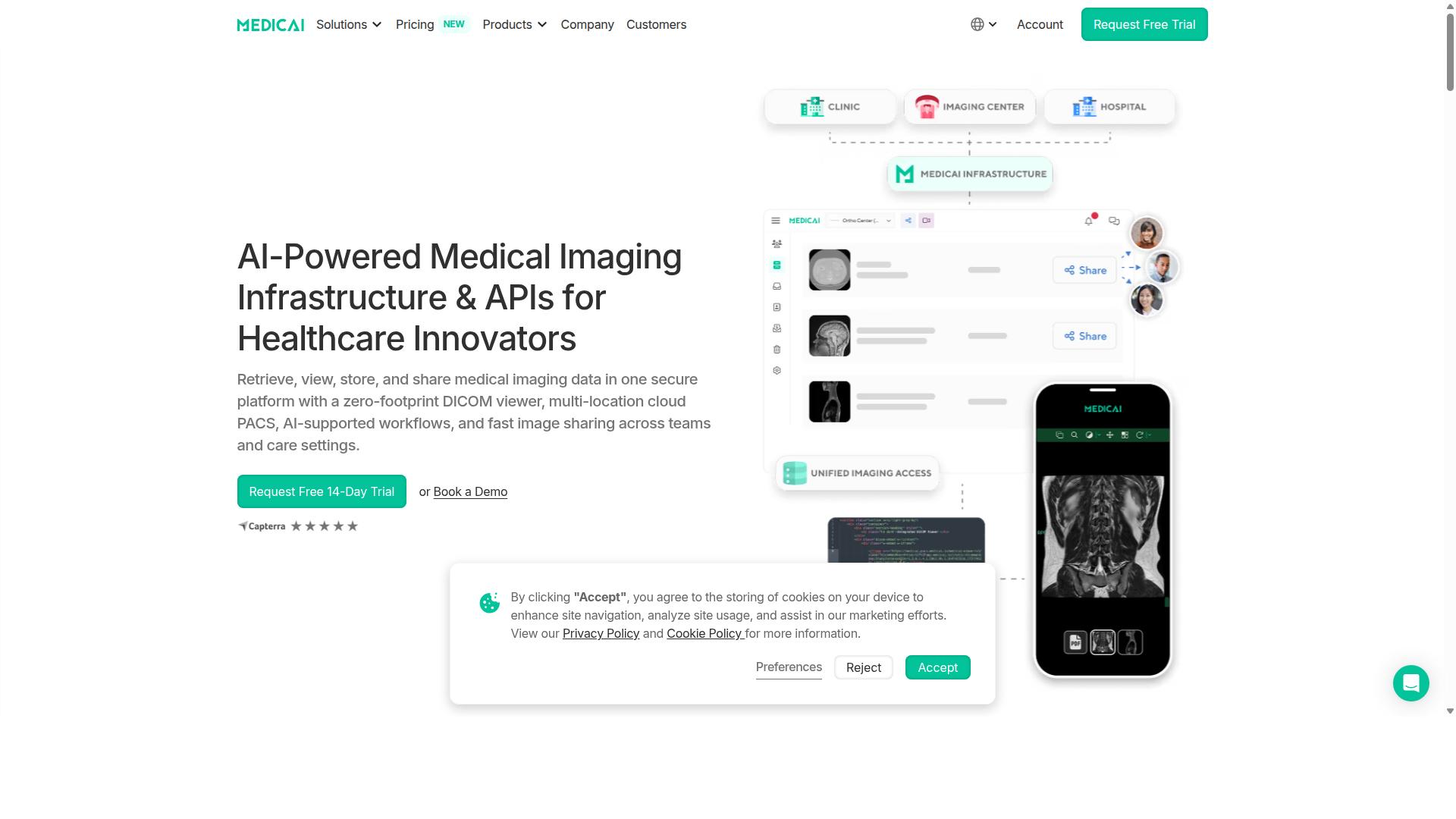
Medicai combines a pay-per-study model with enterprise-grade cloud architecture to serve multi-site health systems seeking predictable imaging costs.
The platform handles enterprise imaging needs across multiple departments, offering transparent billing that aligns with actual study volumes rather than fixed infrastructure expenses. This approach helps organizations control radiology platform expenses while maintaining access to modern cloud imaging capabilities.
Pay-Per-Study Pricing Structure
Medicai's Starter tier starts at $249 per month for 500 GB and unlimited users, while the Standard tier offers 2 TB and one connected location for $749 per month.
Many vendors charge between $1.50 to $3.00 per study on top of monthly fees, creating unpredictable costs for high-volume facilities. Medicai's flat monthly pricing eliminates these per-study fees for Standard tier users, with no additional charges applied per location beyond the single-location limit.
A facility processing 200 studies daily can project significant savings over three years when switching from per-study billing to Medicai's predictable monthly structure. The platform reduces diagnosis time by 65 percent, improving operational efficiency alongside cost management.
Cloud PACS and Multi-Location Capabilities
The Medicai cloud PACS architecture supports Vendor Neutral Archive (VNA) storage and can connect one physical location under the Standard plan.
The platform currently stores 1.7 million plus studies and processes 50 million plus yearly API transactions, demonstrating proven scalability for enterprise imaging demands. Automatic backup and disaster recovery come included at no extra cost, ensuring data protection without additional infrastructure investment.
Medical Image Exchange capabilities enable secure study sharing between departments and external providers. The DICOM Gateway setup fee of $1,000 applies once per location, providing connectivity for institutions requiring integration with existing systems.
AI-Supported Workflows and Viewer Technology
Medicai's zero-footprint DICOM viewer supports AI overlays from Rayscape.ai and MedDream, delivering sub-second study loading on any device.
The platform processed 300,000 plus visualizations last year and transacted 1 million plus studies annually, confirming reliable performance under enterprise workloads. Three AI-partner integrations include Rayscape.ai, MD.ai, and OHIF, providing diagnostic support tools within the radiology platform ecosystem.
Compliance with HIPAA and GDPR standards, along with FDA and CEE cleared viewers, meets regulatory requirements for healthcare organizations. The platform follows OWASP security guidelines to protect medical imaging data across all access points.
2. ProtonPACS
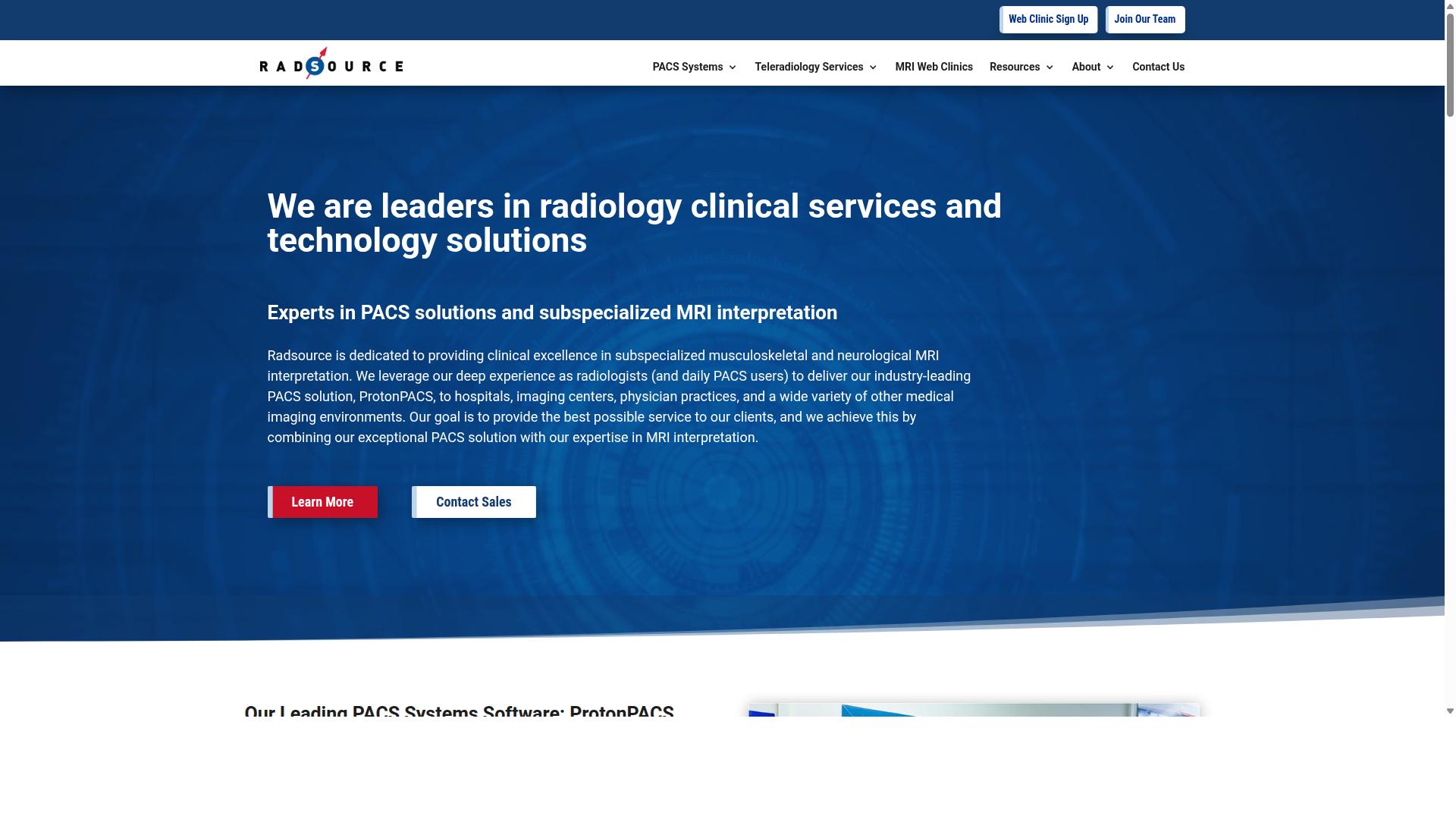
ProtonPACS markets a pay-per-study subscription that charges only when studies are uploaded, appealing to lower-volume sites.
Many facilities choose this platform when predictable monthly costs matter more than fixed licensing fees.
Research suggests usage-based billing can reduce upfront expenses for imaging centers that handle variable study volumes.
Typical uptime claims reach 99.5 percent, while generic DICOM and HL7 support enables basic interoperability with existing systems.
Pay-Per-Study Pricing Structure
ProtonPACS bills per uploaded study; users report rates between $0.75 and $2.50 depending on monthly volume commitments.
Pricing is usage-based rather than flat-rate, which means costs rise or fall with actual study counts.
Experts recommend requesting custom quotes to understand exact fees for particular workflow volumes and modality types.
Buyers should compare these figures against their historical study counts before committing to any contract.
Cloud PACS and Multi-Location Capabilities
ProtonPACS offers a hosted PACS with optional VNA add-ons; multi-site support is limited to separate tenant configurations.
Additional tenant fees apply when organizations need independent environments for each location.
Generic cloud-hosting on AWS or Azure supplies the underlying infrastructure without naming specific integrations.
Facilities planning multi-site deployments should budget for these extra tenant charges during contract discussions.
AI-Supported Workflows and Viewer Technology
ProtonPACS partners with third-party AI algorithms and provides a web-based zero-footprint viewer.
Common viewer features include zoom, pan, and window-level adjustments for image review.
AI plug-ins are available but require separate licensing agreements with each algorithm vendor.
Users should verify compatibility between chosen AI tools and their existing RIS or EMR platforms before purchase.
3. PICOM365
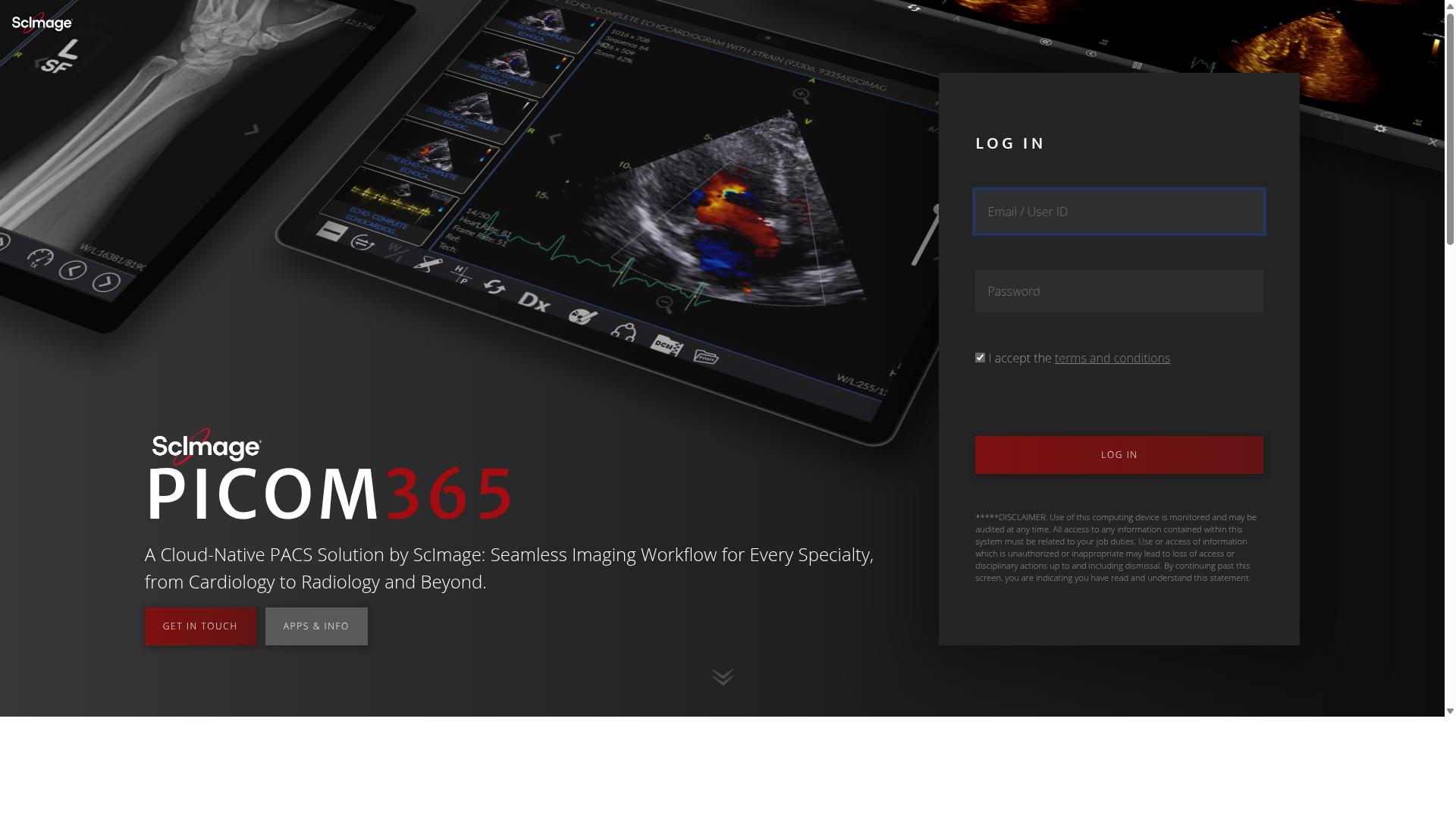
PICOM365 provides a cloud-based pay-per-study PACS targeted at outpatient imaging centers.
Organizations select this platform when usage-based billing aligns with fluctuating study volumes. The system handles imaging workflows across multiple specialties through a unified interface.
Many practices evaluate this option when seeking predictable costs without large upfront capital commitments. Administrators review contract terms carefully before committing to the service model.
Pay-Per-Study Pricing Structure
PICOM365 charges a flat per-study fee plus optional storage overage charges.
Exact rates are quoted individually based on volume projections and service requirements. Typical entry fees start around $1 per study, though final pricing reflects specific operational needs.
Experts recommend requesting detailed service-level agreements before finalizing any contract. These documents clarify storage thresholds, additional charges, and response time commitments.
Finance teams benefit from reviewing all potential line items during the evaluation phase. Clear documentation prevents unexpected costs during high-volume periods.
Cloud PACS and Multi-Location Capabilities
PICOM365 supports multiple reading locations through its cloud VNA, but each site requires its own gateway setup.
Gateway hardware or VM deployment becomes necessary at every physical location participating in the network. This configuration ensures consistent connectivity between each modality and the central archive.
IT departments plan implementation timelines around these infrastructure requirements. Each location needs adequate bandwidth and proper network configuration for reliable study routing.
Multi-site deployment works best when organizations standardize their gateway specifications across all facilities. This approach simplifies ongoing maintenance and troubleshooting procedures.
AI-Supported Workflows and Viewer Technology
PICOM365 integrates third-party AI tools and provides a browser-based viewer compatible with mobile tablets.
Standard viewer tools include cine playback and multiplanar reconstruction capabilities. These features support routine diagnostic review across different imaging modalities.
AI functionality arrives through external plug-in connections rather than native platform development. This modular approach allows practices to select specific algorithms matching their clinical workflow needs.
Physicians access studies from various devices while maintaining image quality standards. Mobile compatibility extends reading capabilities beyond traditional workstation environments.
How to Choose the Right Option
First sentence: Match platform choice to case volume, number of physical sites, integration depth required with existing EMR or RIS, and projected three-year imaging growth.
Total cost of ownership carries the largest weight at thirty percent because pay-per-study pricing shifts expenses from fixed capital outlays to variable operational costs. Hospitals operating three to fifteen sites with daily volumes between fifty and five hundred studies see clear budget predictability when each exam carries a transparent fee rather than an annual license.
Interoperability certifications receive twenty-five percent weight. Standards-based connectors such as HL7 and FHIR allow seamless data exchange with existing EMR or RIS systems. Without verified certification, custom interface work can add months and thousands of dollars to implementation.
Uptime SLAs account for twenty percent of the decision because radiology departments rely on continuous image access. Service-level agreements that guarantee ninety-nine point nine percent availability reduce the risk of workflow disruption across multiple facilities.
AI roadmap weighs fifteen percent. Platforms that already integrate diagnostic algorithms and cloud imaging modules can shorten future technology cycles without requiring separate vendor contracts.
Onboarding timeline represents the final ten percent. A structured deployment plan that migrates legacy DICOM studies, configures modality worklists, and trains users within sixty to ninety days keeps project momentum high and minimizes parallel system costs.
Enterprise imaging leaders evaluate these weighted criteria against their specific pay-per-study pricing model before signing multi-year agreements.
Final Verdict
For organizations prioritizing predictable monthly costs, multi-vendor AI integration, and a zero-footprint viewer cleared by FDA and CEE authorities, Medicai's combination of flat-rate tiers and usage metrics stands out.
Three factors separate enterprise imaging platforms when pay-per-study pricing becomes a constraint. Flat monthly fees replace variable study charges, removing surprise invoices at month end. Scale and uptime matters when 1.7 M studies sit in storage and 99.9 percent uptime is the published baseline. Interoperability evidence is visible through 50 M plus API transactions that connect radiology systems, EMRs, and AI engines without custom code.
Most pay-per-study models bill after each upload and download, making costs unpredictable for high-volume centers. Flat-rate tiers shift the conversation from study counts to patient care volume. This structure gives administrators the budget clarity required for multi-site deployments and radiology platform expansions.
Storage volume alone does not prove reliability, yet 1.7 M hosted studies paired with a 99.9 percent track record demonstrates sustained performance. Hospitals running multi-vendor AI tools rely on that uptime when critical images must reach specialists within minutes across time zones.
Interoperability at scale requires more than HL7 or FHIR interfaces. The 50 M plus yearly API transactions prove Medicai handles real traffic from 70 clinics, 10 000 active physicians, and 2 M uploaded imaging studies without latency spikes. That volume translates into faster study routing, modality worklist updates, and seamless VNA integration.
To see how flat monthly pricing works at your volume, request a personalized demo by contacting Medicai through the details listed on their website.