Top 7 Alternatives of Cimar
Radiology teams often outgrow Cimar when file upload limits and sharing delays start to slow case reviews across sites. Some platforms force extra steps for multi-location access or refuse to work together with existing viewers, creating daily friction that compounds over time. The decision to switch now comes down to concrete limits on speed, compatibility, and cost.
By the end of this article you will know the exact criteria for choosing a replacement, see how seven platforms including Medicai stack up on those criteria, and have a short list that matches your workflow and budget.
What to Look For in Cimar Alternatives
When evaluating Cimar alternatives, focus on five specific capabilities that directly impact daily radiology operations.
DICOM upload speed measured in studies per minute determines how quickly imaging data moves into the system. Faster transfer rates reduce wait times for radiologists and support staff who handle multiple cases throughout the day.
Native EHR integration depth depends on whether the platform supports HL7 or FHIR standards. Deeper integration means patient records and imaging data flow between systems without manual file transfers or duplicate entries.
Zero-footprint viewer latency under two seconds on standard broadband connections ensures images load quickly during consultations. Slow loading disrupts clinical workflows and frustrates both staff members and patients waiting for results.
HIPAA and GDPR audit log granularity tracks every access event and modification to patient data. Detailed logs help organizations meet regulatory requirements and demonstrate compliance during audits or investigations.
Storage scalability from 500 GB to multi-terabyte buckets without contract changes allows facilities to grow their imaging archives as patient volume increases. Flexible storage prevents unexpected fees or system migrations when data needs expand.
1. Medicai - Best Overall
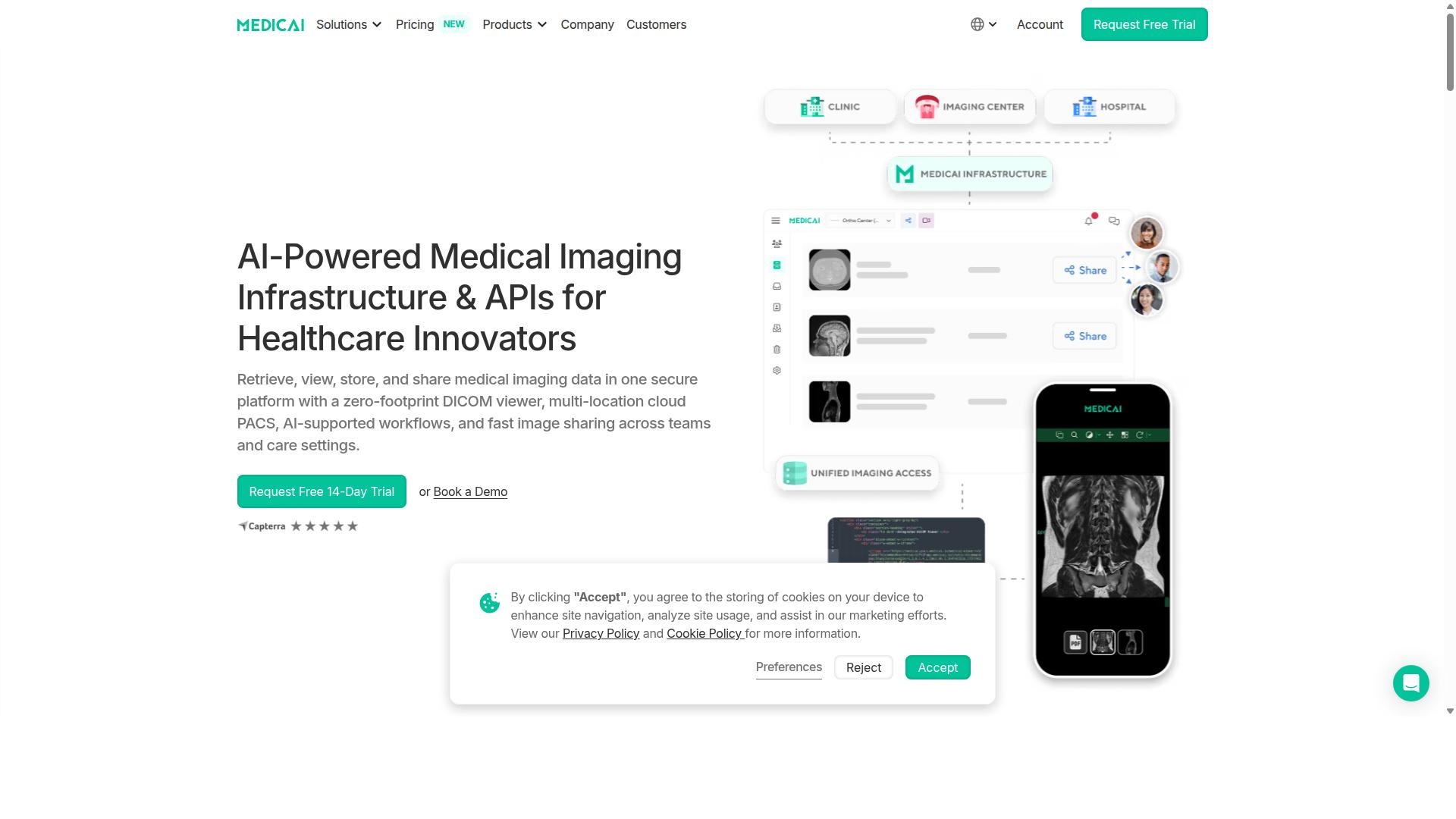
Medicai earns top ranking by combining enterprise-grade medical imaging management with transparent pricing and global compliance.
The platform processes over one million annual studies and handles more than fifty million yearly API transactions. This volume demonstrates consistent performance across demanding clinical environments.
Multi-location workflows receive dedicated support through cloud PACS and Vendor Neutral Archive modules. Healthcare teams can exchange images securely between sites without additional infrastructure investments.
Global compliance standards receive careful attention, making the platform suitable for organizations that operate across different regulatory jurisdictions. The architecture supports both existing hospital systems and new clinical trial requirements.
Key Features & Pricing
Medicai's tiered subscription model starts at $249 per month and scales storage and connectivity.
The Starter plan provides 500 GB of storage with unlimited user accounts. Organizations pay nothing extra for additional users while staying within storage limits.
The Standard plan increases storage to 2 TB and includes one connected location. This tier adds the DICOM Gateway setup for $1,000 per location as a one-time fee.
Core modules include the zero-footprint DICOM viewer, Medical Imaging Uploader, Cloud PACS, and Vendor Neutral Archive. Each component addresses specific workflow requirements without requiring separate licensing agreements.
Yearly billing reduces costs by 15 percent, bringing the Starter plan to $209 per month. Enterprise customers can negotiate per-study pricing based on specific volume needs.
Who It's Best For
Hospitals, imaging centers and specialty clinics with multi-site imaging workflows benefit most from Medicai's architecture.
Radiology and cardiology departments process large study volumes that require reliable storage and rapid access. The platform handles these requirements through dedicated cloud infrastructure.
Orthopedics and oncology practices often share images across multiple locations. Medicai's connected location model supports this exchange while maintaining compliance standards.
Neurology departments frequently collaborate on complex cases that involve different specialists. The unlimited user accounts allow all team members to access studies without additional per-user costs.
Personal injury lawyers and tumor boards also utilize the platform for secure image sharing. Clinical trials and medical education organizations find the same infrastructure meets their documentation and review requirements.
2. Studycast
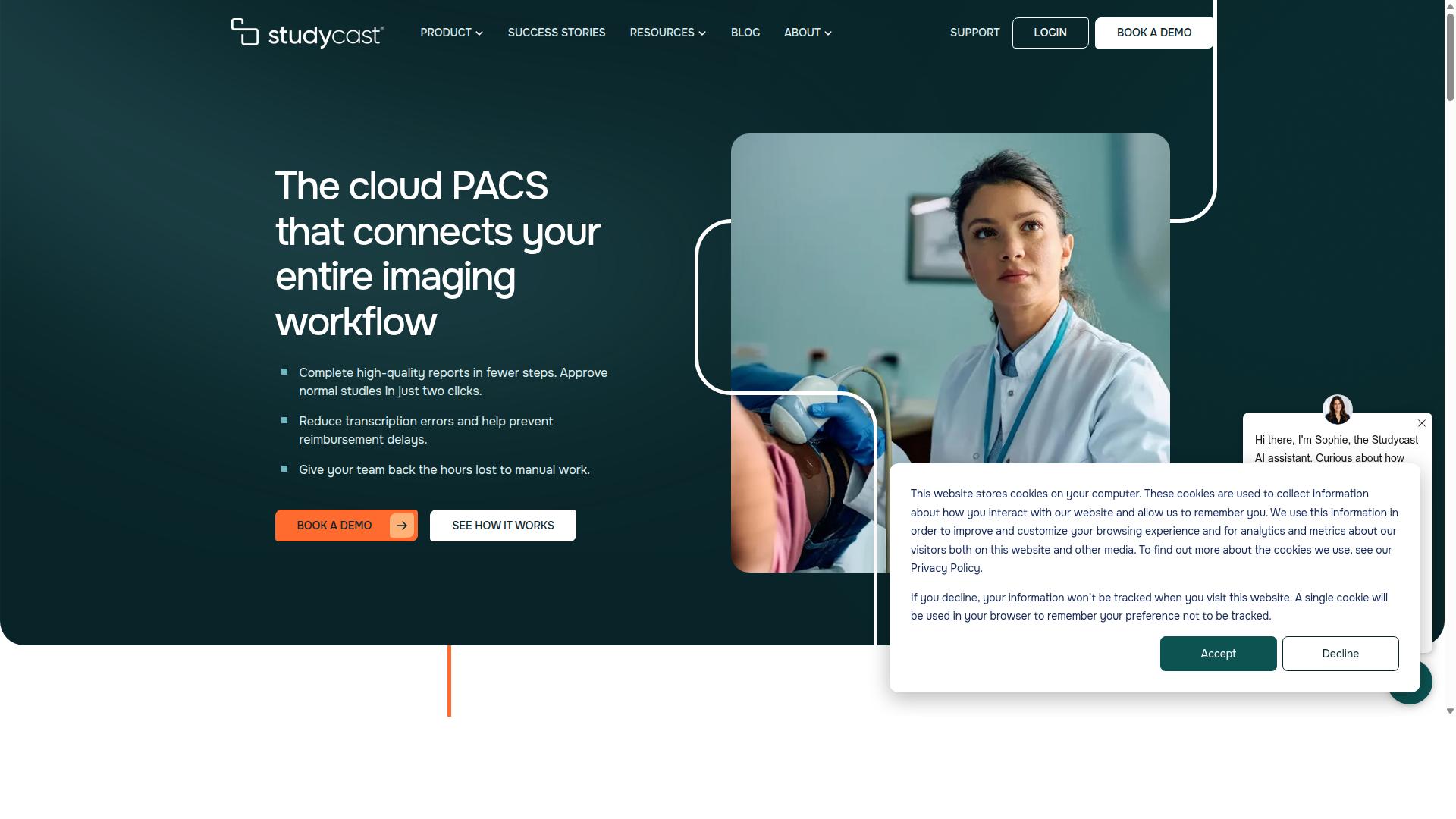
Studycast provides cloud-based ultrasound workflow and reporting tools geared toward smaller imaging centers. The platform stores, reviews, and reports studies from ultrasound, nuclear imaging, X-ray, MRI, and other modalities. Many practices choose this option when they need a system that supports multiple specialties without requiring large IT teams.
Workflow automation helps reduce manual steps in exam processing. Users can complete normal reports in two clicks, and the average time to read and approve an exam reaches 2.4 minutes. Structured reporting templates cover more than 140 study types across cardiology, vascular, women's health, and point-of-care settings.
PACS integration allows the system to receive images directly from existing modalities and share them with referring physicians. The platform also connects with common EHR systems and supports HIPAA-compliant image sharing between locations. These connections make it easier for multi-location practices or mobile imaging services to maintain consistent workflows.
Reporting dashboards give administrators visibility into exam volumes, turnaround times, and staff productivity. Physicians, sonographers, and IT staff can each access role-specific views. The same interface works for private practices, ambulatory surgery centers, hospitals, and academic research environments.
Enterprise organizations often deploy Studycast across multiple sites when they need centralized reporting standards. Smaller offices and single-location labs start with the same core tools but run fewer concurrent studies. Both scenarios benefit from the cloud architecture that removes the need for on-site servers and dedicated maintenance staff.
3. Intelerad

Intelerad targets large health systems with enterprise imaging and teleradiology solutions. The platform focuses on high-volume study routing across multiple sites and departments. Many hospitals use it to consolidate imaging records from different specialties.
Multi-PACS aggregation allows organizations to pull studies from several archives into one interface. This setup reduces the need for staff to switch between systems when reviewing patient records. The approach works well for networks that have grown through mergers or acquisitions.
Single sign-on capabilities help clinicians access imaging tools without multiple logins. This feature supports faster workflow across radiology, cardiology, and pathology departments. Hospitals often look for this capability when they want to reduce login friction.
Security protocols match enterprise standards for protected health information. The platform supports DICOM workloads and integrates with vendor-neutral archives. These elements appeal to health systems that need consistent data handling across locations.
Deployment options include cloud and hybrid models depending on system requirements. Large organizations evaluate these choices based on existing infrastructure and compliance needs. The platform serves institutions seeking to unify imaging records across many departments.
4. ProtonPACS
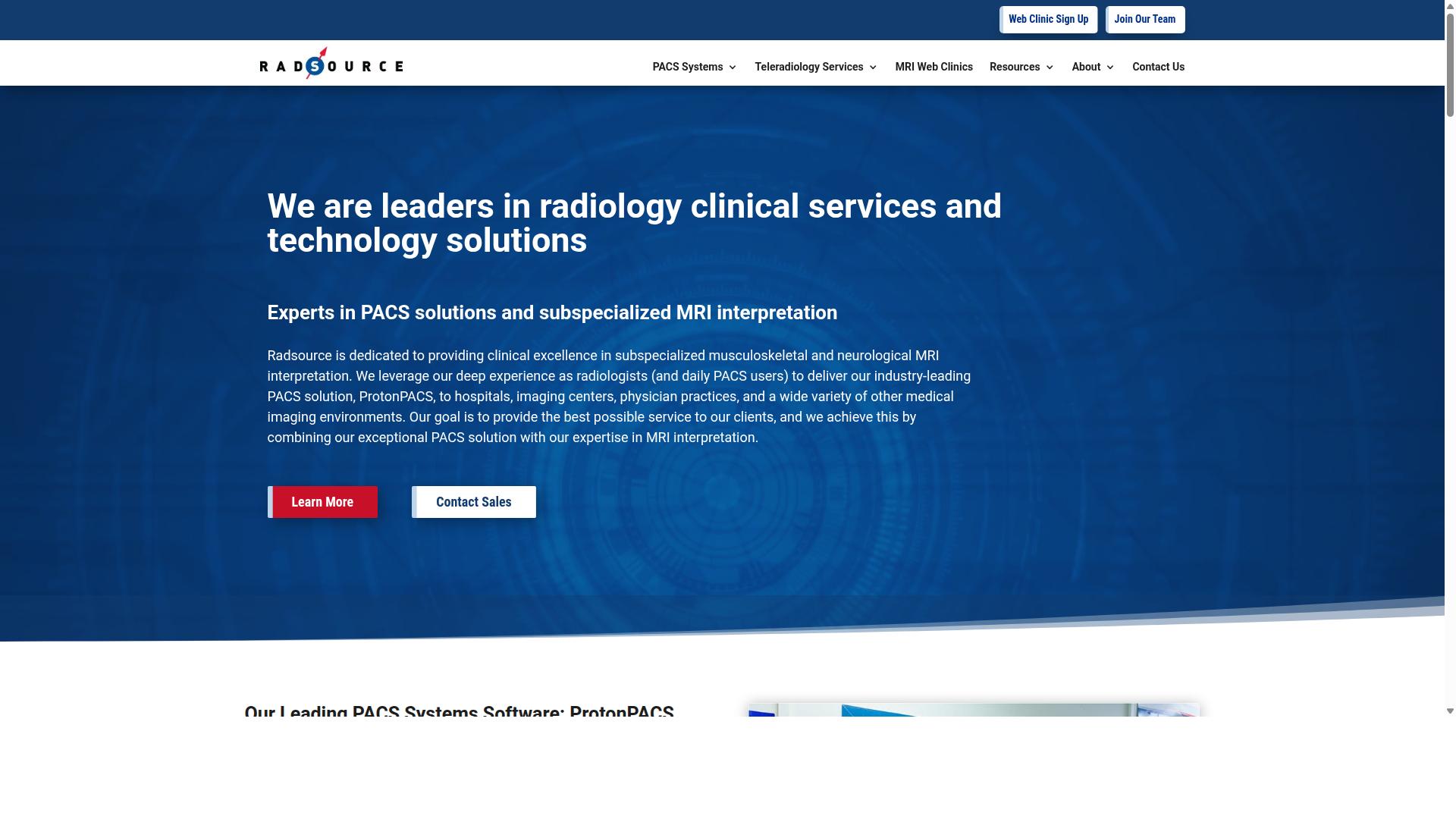
ProtonPACS delivers both on-premise and cloud PACS options for facilities preferring hybrid deployments. Organizations can choose hardware appliances that match their current infrastructure needs while maintaining flexibility for future growth.
Hardware appliance choices typically include dedicated servers configured for medical imaging workloads. These systems handle storage, processing, and retrieval tasks within the facility network environment.
Local archive redundancy protects against data loss through multiple storage mechanisms. Facilities implement backup strategies that keep critical imaging data accessible even during hardware failures or network disruptions.
Optional cloud bursting extends local capacity during peak periods. When on-premise resources reach capacity limits, the system can automatically route overflow studies to cloud storage without manual intervention.
This approach suits practices that need immediate access to recent studies while maintaining cost control over older archives. The hybrid model allows gradual migration from fully local systems to more distributed storage arrangements.
5. Ambra Health
Ambra Health focuses on cloud image exchange and patient-facing portals for multi-site networks.
Many organizations choose this platform when they need universal viewer access across different locations and devices. The system supports web-based viewing so radiologists and clinicians can review studies without installing specialized software on every workstation.
Patient study share links allow facilities to send imaging studies directly to patients or referring physicians. Recipients receive secure access through a browser, which simplifies communication and reduces delays in care coordination.
The platform also connects with third-party EHR connectors, enabling imaging data to flow into existing electronic health record systems. This integration helps maintain consistent patient records across departments and external partners.
Users often mention reliable performance for multi-location health systems and research groups. The service handles both DICOM and non-DICOM files, which supports a range of clinical and academic workflows.
Deployment happens through a cloud model, so facilities avoid managing on-premise servers. Subscription pricing applies, though exact costs depend on volume and specific requirements.
6. UltraLinq
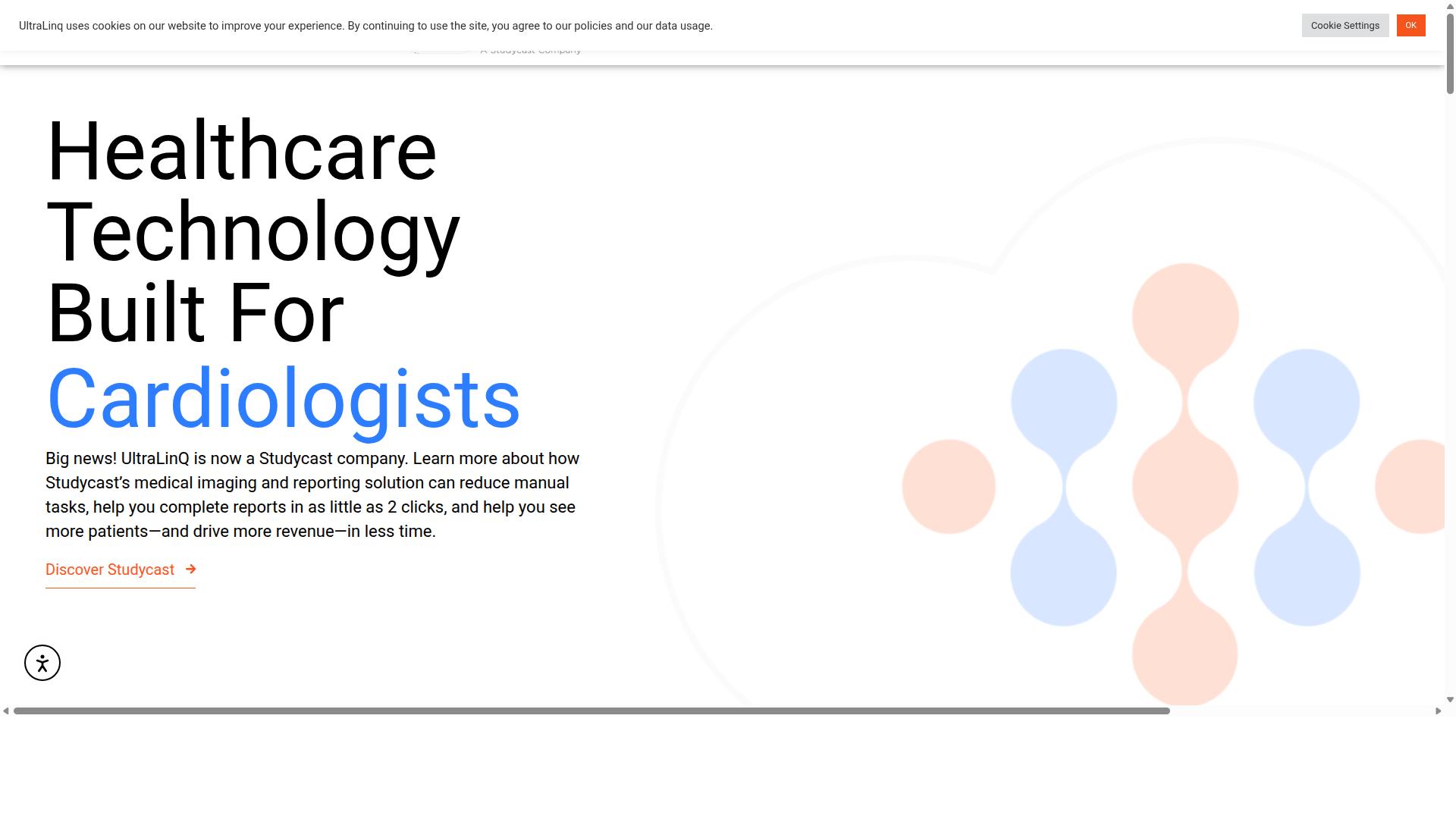
UltraLinq specializes in cloud ultrasound reporting and structured data management. The platform supports cardiology workflows through secure remote access from any internet connected device.
Users benefit from mapped reports that standardize documentation across imaging centers. Customizable worksheets allow teams to adjust templates while maintaining consistent data entry standards.
The platform includes automated measurement tools that reduce manual calculations. These features support cardiologists, sonographers, and vascular specialists working in hospitals and rural clinics alike.
Quality assurance dashboards provide visibility into exam volumes and report turnaround times. Administrators can monitor performance metrics across multiple sites without additional software installations.
Personalized report branding options help maintain institutional identity across all outputs. Security features include multi-factor authentication and single sign-on capabilities for enterprise environments.
UltraLinq serves over 8000 locations with reported usage starting at $3999 for usage-based one-time access. The platform handles post-processing analytics alongside traditional image storage requirements.
7. Agfa HealthCare
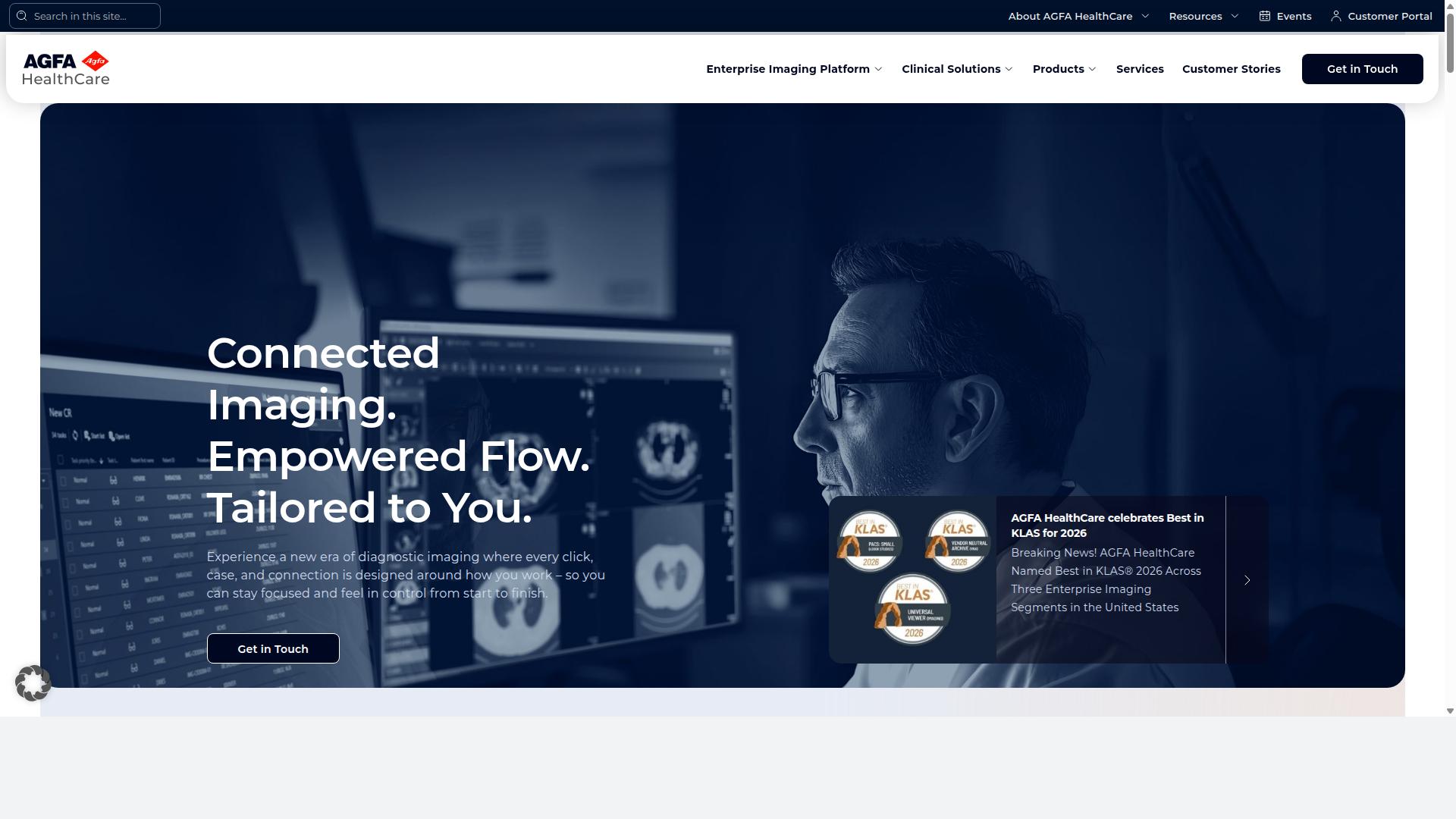
Agfa HealthCare offers enterprise imaging suites with both on-premise and cloud deployment models.
The platform unifies radiology information systems with picture archiving and communication systems under one standards-based framework. This consolidation reduces the need for separate databases and simplifies data movement across care settings.
Regional archive architectures sit at the core of the solution. These architectures enable hospitals and health systems to keep imaging records in shared repositories while maintaining local access and performance.
Regulatory compliance modules address security and privacy requirements common in healthcare environments. Organizations can apply audit trails, role-based access controls, and encryption policies without building custom layers.
Key products include a universal viewer, business intelligence tools, and an artificial intelligence orchestrator. These components support specialties such as cardiology, pathology, and breast imaging through a single interface.
Interoperability remains a stated priority. The platform accepts data from multiple vendors and formats, which helps facilities avoid lock-in while preserving existing investments in equipment and workflows.
How to Choose the Right Option
First sentence: Match platform capabilities to your case volume, regulatory needs, and existing vendor ecosystem.
Start by counting monthly studies and how long each record must stay accessible. High-volume imaging centers often generate thousands of studies per month, which drives storage costs and performance requirements.
Next, list the EHR and EMR systems your teams rely on today. Many organizations need DICOM connectivity, HL7 feeds, and FHIR endpoints to move images and reports without manual work.
Third, decide whether your workflow spans one location or several. Multi-site setups need centralized access controls, unified patient IDs, and bandwidth that supports simultaneous viewers across cities.
Finally, compare subscription pricing with perpetual license fees. Subscription models shift costs to monthly operating expenses and usually include maintenance, while perpetual licenses front-load capital but may add separate support contracts.
Medicai serves hospitals, imaging centers, and specialty practices that handle orthopedics, neurology, oncology, radiology, cardiology, and related fields. Its cloud platform also supports virtual care providers, teleradiology services, tumor boards, clinical trials, and medical education organizations through a patient portal for secure image sharing.
Final Verdict
No single platform fits every scenario; selection hinges on measurable operational priorities.
Organizations processing over 1M studies annually and requiring HIPAA/GDPR compliance plus open API access should shortlist solutions demonstrating 50M+ yearly API transactions and proven multi-PACS interoperability.
Medicai meets these criteria through its established infrastructure, including over 1M studies processed yearly and 50M+ yearly API transactions.
The platform maintains HIPAA and GDPR compliance while following OWASP security guidelines, and it supports FDA/CEE cleared viewers for clinical use.
Multi-PACS interoperability allows organizations to connect existing imaging systems without replacing current infrastructure.
With 70 clinics and hospitals plus 10,000+ active doctors on the platform, Medicai demonstrates real-world scalability across diverse healthcare environments.
Microsoft Azure partnership provides enterprise-grade cloud reliability for sustained high-volume operations.
Organizations evaluating Cimar alternatives should verify these exact operational metrics across all shortlisted platforms before final selection.
Recommended Resources: